
Wood Stoves and Your Health
Wood stoves are truly magnificent.
There is nothing better, on a cold winter day, than being warmed by the red, flickering light emanating from a real fire that burns the wood which you cut, stacked, and split yourself!
Turn the lights off and you may find yourself mesmerized by the beauty of one of nature's most powerful forces held captive in your little metal box.
And boy do they make you feel warm! If the feelings of warmth, coziness and intimacy sound appealing then nothing beats a wood stove!
But Nothing is Free
Wood stoves have their issues.
Most wood stove owners know of the potential fire hazards that come from unmaintained chimneys, or of carbon monoxide poisoning that can occur if the stove is not venting properly.
But there is another danger lurking by your wood stove.
One that is often overlooked…
Hazardous emissions
For all of their beauty and the sense of independence that a wood stove brings the home owner, wood stoves sure are filthy.
They will leave a big, dusty mess in their wake which for all of its unsightlyness is nothing compared to the toxic pollutants that they release into the air, for according to “What You Need to Know About Your Wood-Burning Stove and Heater” (2023) “The smoke from wood-burning devices, such as stoves and heaters, contains fine particle pollution, and hazardous air pollutants such as carbon monoxide, volatile organic compounds, nitrogen oxides, benzene and formaldehyde (What You Need to Know About Your Wood-Burning Stove and Heater “Health Effects Caused by Wood Smoke” section para. 1).”
Pollutants such as benzene and formaldehyde are classified as carcinogens by the American Cancer Society (Known and probable human carcinogens n.d.), but as if this isn’t worrisome enough, wood stoves also emit fine particles into the air which are “especially dangerous because these tiny particles can get deep into the organs, harming not just the lungs, but also blood vessels, the heart and brain” (What You Need to Know About Your Wood-Burning Stove and Heater “Health Effects Caused by Wood Smoke” section para. 1).
Have you ever begun coughing and wheezing after tending to a wood stove fire? I bet you have. This is a direct result of the gasses and particulates emitted from the stove.
Wood stove use has been linked to:
chronic respiratory diseases
heart disease
pulmonary function deficits
“ harm to the lungs, kidneys, liver, nervous system, and brain”
And a 70% increased risk of lung cancer
(Kuyem, Kumar 2025, “Introduction” section, para 3).
Just Say NO to Wood?
Before we go any further, sure… wood stoves aren’t the healthiest way to heat your home. But they do enable you to save a lot of money on heating costs — and you know what else isn’t good for your health? Being poor.
The links between being poor and poorer health outcomes are well established all over the world. If you want to verify this then you can find a plethora of information on the topic.
The money you save from heating your home with wood, for many people, can be the difference between missing payments on your bills and having to skip meals.
So weigh the risk before swearing off wood stoves.
Mitigate the Risk When There’s a Fire Inside
You can never eliminate the health risk of running a wood stove, but you absolutely can lesson them to a significant extent.
Air Purifiers
Simply putting an air purifier near the stove - not so close that it’s going to get too hot obviously - can make a tremendous difference.
In fact, according to the “Environmental Protection Agency” (n.d.) an air filter with clean air delivery rates of 100 to 300 cubic feet per minute can reduce particulate matter from wood stoves by up to 50% (Facts & Figures section bullet 11).
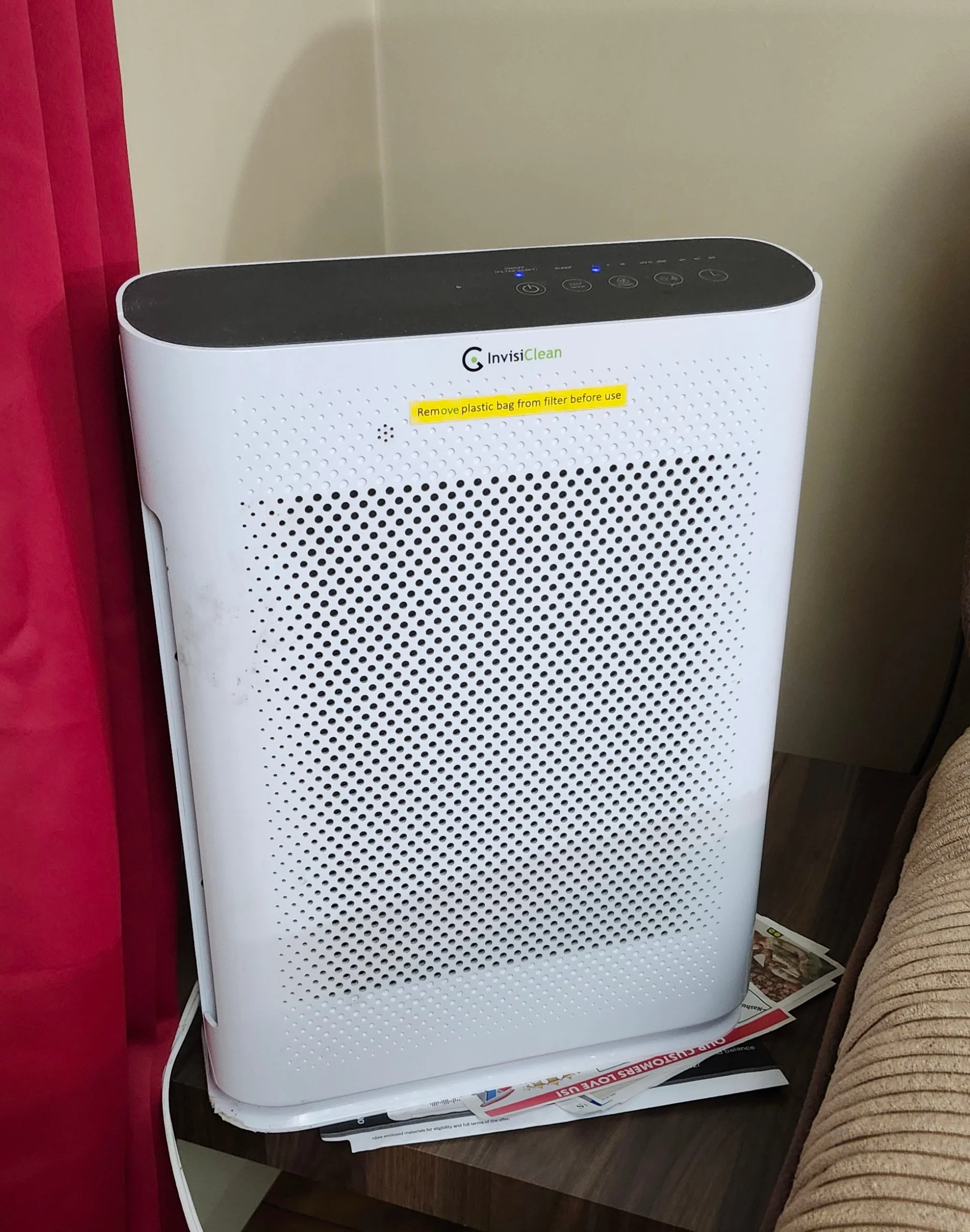
A Great Air Purifier
This is the air purifier that I use. It falls within the 100 to 300 cubic feet per minute range mentioned above and its given me great service for many years. Let it serve you by clicking below!
Burn Quality Wood
Do not burn trash, cardboard, plywood, anything with paint or plastic - you get the picture.
Only burn well seasoned firewood, or products like biobricks that are specifically designed to be burned in your woodstove.
Store it Properly
Be sure to split the logs and store the wood properly.
Proper storage is to get it up off the ground, stack it, and keep it covered from the rain and snow whilst ensuring that it gets plenty of air flow. And give it at least six months to dry if it’s softwood and at least a year if it is hardwood (Environmental Protection Agency, n.d., “Health and Safety Tips” bullet 3).
Ensuring that the wood is well seasoned will reduce the amount of particulates produced when burning it, since not as much energy has to be wasted vaporizing the wood’s moisture, so the wood can burn hotter thereby leaving less pollutants.
Hazards of Tending to the Fire
Obviously, since the ashes are being disturbed and the door is wide open, activities like adding more logs to the fire, and removing or stirring ashes allow the highest amounts of particulates and gasses into the home (Kuye & Kumar, 2025, “Summary and conclusion” section, bullet 1), so special precautions should be taken whenever the stove's door is open.
Open a Window
According to Kuye & Kumar (2025) “Periodic window opening [can] reduce the… particulate matter exposure by about 2.9- and 1.8-times” ( Summary and conclusion section, Bullet 8).
Obviously just leaving the windows open is not an option since that would defeat the purpose of heating the house, but opening nearby windows during those moments when particulate matter and gasses are most likely to enter the home - when the door to your wood stove needs to be open - can help to ventilate the house when it is most needed. And opening the windows near the stove for a few moments when you are tending to the fire is not going to result in excessive heat loss.
Speaking of opening the door
Always open the door to the wood stove very slowly. (Environmental Protection Agency. N.d., “Health and Safety Tips” bullet 9). Opening the door quickly will cause smoke, ashes, and particulates to enter the home.
You should unlatch the door, give it a moment, then open it a crack, give it another moment, and then slowly open it from there.
You can experiment with this and see for yourself what happens when you open the door too fast. You can watch the smoke and ash come flying out the door and into the room.
Maybe a Little Impractical
I personally do not do this, as I believe it’s a bit impractical and overkill but if you are very concerned with the particulates emitted during the fire tending process then you may want to wear an N-95 mask when performing these tasks. These masks “will filter out the damaging fine particles” (Residential wood burning, 2023, “Outdoors” Section, bullet 2), emitted from your stove.
Get an Ash Vacuum
Seriously, get an ash vacuum.
Ash vacuums are a convenient way of cleaning the ashes, and they also reduce particulate matter in your home (Kuye & Kumar, 2025, “Summary and conclusion” section para. bullet 8).
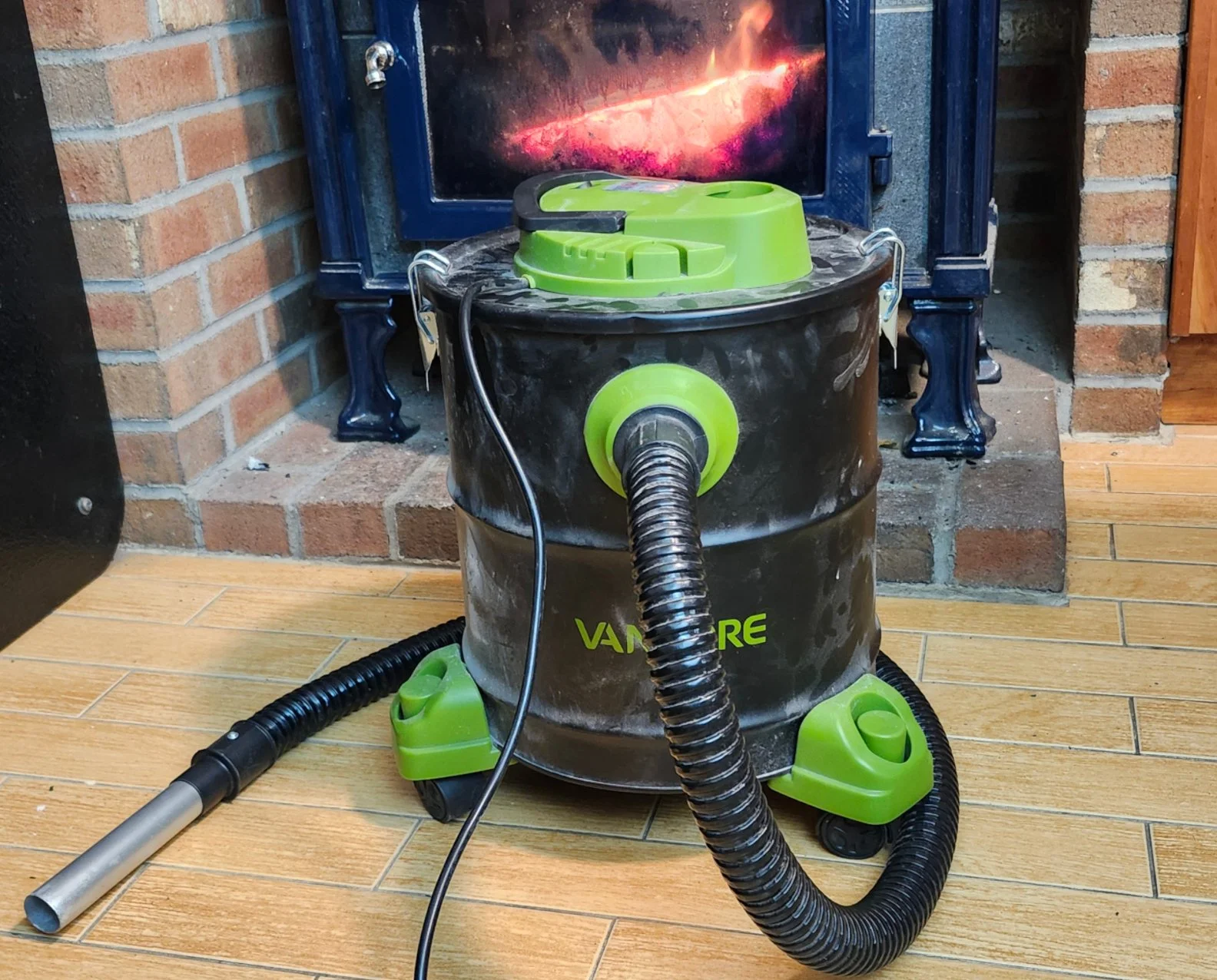
Vanpore Ash Vacuum
This is my ash vacuum that has served me well through a lot of use! Click the link to read more about it!
You should use your ash vacuum to clean up the ashes that inevitably fall out of your stove and end up on the floor or those that coat the objects nearby.
But try to avoid sucking up red hot coals into the vacuum. Most ash vacuums are only for removing cold ash, though I’ve never had an issue with vacuuming ashes that fell out of my stove soon after the fact.
When red hot coals fall out I pick them up with my welding gloves and put them back in the stove and I vacuum the smaller stuff.
The Tool of Many Uses
When sifting through the hot coals and dead ashes you can position the ash vacuum nearby so some of the ash that flies around during this process will be sucked up into the vacuum instead of into your lungs.
Ash vacuums tend to clog often and need the filters shaken out, this is why when I’m cleaning up a lot of ash, typically after the fire has gone out completely, I use an ash scoop to do the heavy lifting, but I still like to position the ash vacuum on top of the stove so it gets most of what's being kicked up.
The One Thing You Should Never Do
Do not scoop the ashes with a shovel and then dump them into a bucket. There will be a ginormous, thick, black, cloud of ash that will cover everything nearby including your lungs. If you’re going to do this then you mine as well forget the bucket and just dump the ashes straight onto the floor.
Use either an ash scoop, or an ash vacuum or better yet use both!
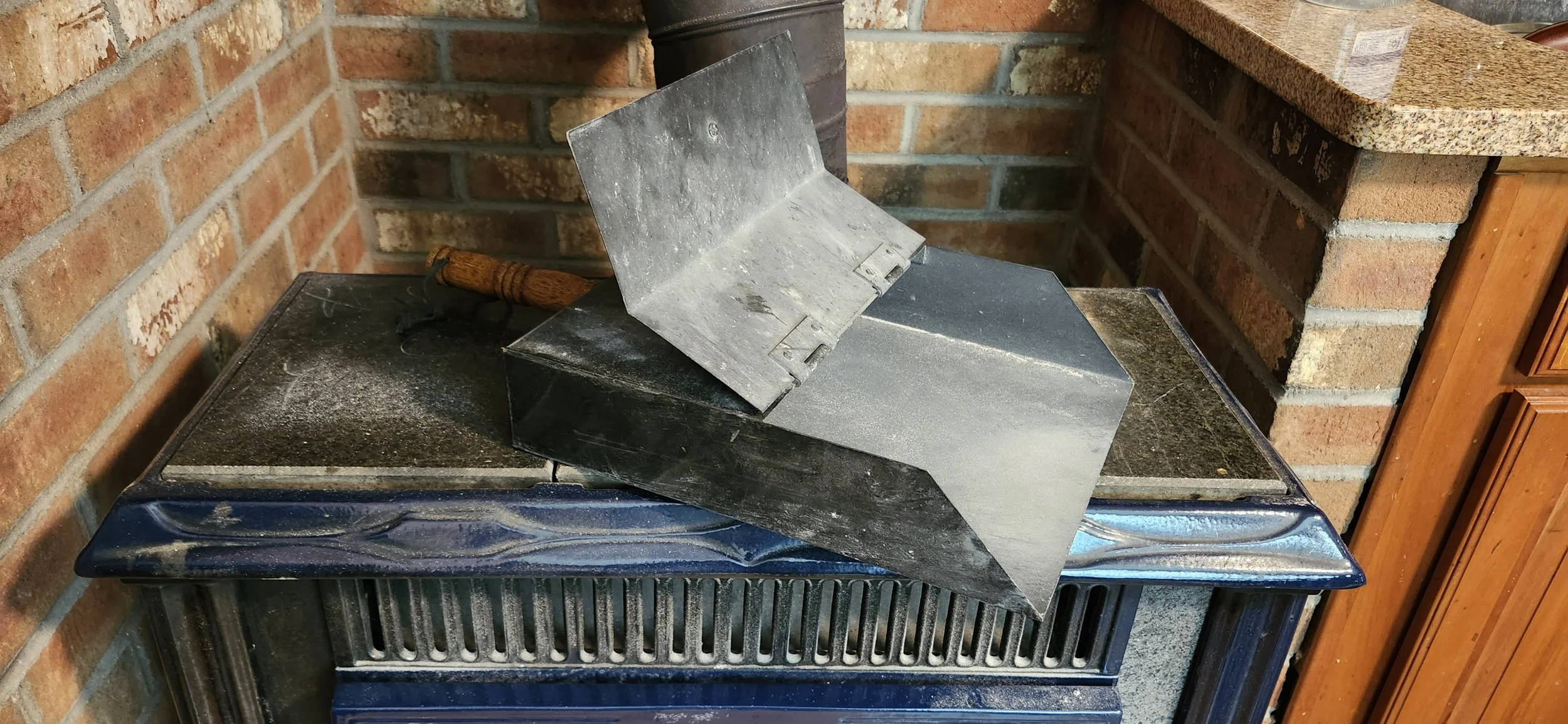
This ash scoop is the best tool that I ever bought for my wood stove. If I could only recommend one tool, it would be this one. It substantially reduces the mess from cleaning up piles of left over ashes!
If you buy one extra tool for the stove then make it this one!
And the Other Thing You Should Never Do
Do not use a regular household vacuum to clean the ashes.
Regular vacuums cannot trap the super fine particles found in your stove’s ashes. They will just spit them out back into the air.
And a regular vacuum could catch fire if you accidentally suck up hot embers.
On the contrary from what I’ve seen with ash vacuums, you should generally try to avoid vacuuming up hot coals and embers but sucking up a few won’t hurt it. Though consult the manufacturer of your vacuum to make sure of this.
The fine particles will also clog the motor of your household vacuum and will turn it into a big awkward paperweight, since the filters aren't designed to catch the fine particles like that of an ash vacuum.
Wood Stoves - Beauty and the Heat!
So there you have it. Wood stoves can be bad for your health, but if you take some precautions you can minimize the risk and still enjoy lower heating bills and the unique warmth that only a wood stove can bring both physically and emotionally!
References
Environmental Protection Agency. (n.d.). Burn Wise: Facts & Figures + Health and Safety Tips. EPA. https://www.epa.gov/burnwise/burn-wise-facts-figures-health-and-safety-tips
Known and probable human carcinogens. American Cancer Society. (n.d.). https://www.cancer.org/cancer/risk-prevention/understanding-cancer-risk/known-and-probable-human-carcinogens.html
Kuye, A., & Kumar, P. (2025, July 1). Particulate matter exposure from different heating stoves and fuels in UK homes. Nature News. https://www.nature.com/articles/s41598-025-05886-1
Residential wood burning. American Lung Association. (2023, November 2). https://www.lung.org/clean-air/indoor-air/indoor-air-pollutants/residential-wood-burning
What You Need to Know About Your Wood-Burning Stove and Heater. American Lung Association . (2023, January 3). https://www.lung.org/blog/wood-burning-stoves-and-heaters
